Find the right combination
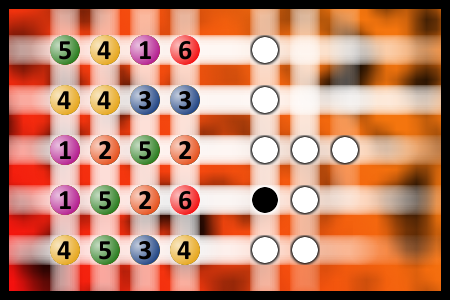
The computer chose a secret code (sequence of 4 digits from 1 to 6). Your goal is to find that code. Black circles indicate the number of hits on the right spot. White circles indicate the number of hits on the wrong spot.Correct answers: 65
The first user who solved this task is Sanja Šabović.
#brainteasers #mastermind

True Friendship - without the...
True Friendship - without the Sissy Crap
1. When you are sad -- I will help you get drunk and plot revenge against the sorry bastard who made you sad.
2. When you are blue -- I will try to dislodge whatever is choking you.
3. When you smile -- I will know you finally got laid.
4. When you are scared -- I will rag on you about it every chance I get.
5. When you are worried -- I will tell you horrible stories about how much worse it could be until you quit whining.
6. When you are confused -- I will use little words.
7. When you are sick -- Stay the hell away from me until you are well again. I don't want whatever you have.
8. When you fall -- I will point and laugh at your clumsy ass.
9. This is my oath..... I pledge it to the end. "Why?" you may ask; "because you are my friend".
1. When you are sad -- I will help you get drunk and plot revenge against the sorry bastard who made you sad.
2. When you are blue -- I will try to dislodge whatever is choking you.
3. When you smile -- I will know you finally got laid.
4. When you are scared -- I will rag on you about it every chance I get.
5. When you are worried -- I will tell you horrible stories about how much worse it could be until you quit whining.
6. When you are confused -- I will use little words.
7. When you are sick -- Stay the hell away from me until you are well again. I don't want whatever you have.
8. When you fall -- I will point and laugh at your clumsy ass.
9. This is my oath..... I pledge it to the end. "Why?" you may ask; "because you are my friend".