 |
 |
Flex Wordle |
 |
Task 13 - BEATS, KUDZU, MAKER
Average Number Of Attempts: 3.00
Correct Answers: 5 - Total Answers: 15
Correct Answers: 5 - Total Answers: 15
Rules
Guess the Flex WORDLE in 3 tries. After each try, the color of the tiles will change to show how close your guess is to the solution.
If the tile becomes GREEN, your number or operation is located at correct place. If the tile becomes RED, your number or opeartion exists within the expression, but at different place.
Joke Of The Day
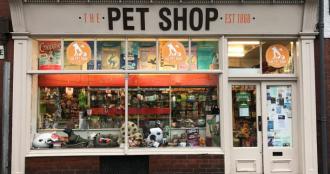
Blonde in a Pet Store
A blonde lady in the pet shop asks about buying a gold fish.
The salesperson ask if she needed an aquarium.
Her reply, 'I don't care what sign it is.'
Source: JokesOfTHeDay.net - Brain Teasers Partner
On This Day
Elastic bands patentIn 1845, a method of manufacturing elastic (rubber) bands was patented in Britain by Stephen Perry and and Thomas Barnabas Daft of London (G.B. No. 13880/1845). In the early 19th century, sailors brought home items made by Central and South American natives from the sap of rubber trees, including footwear, garments and bottles. Around 1820, a Londoner named Thomas Hancock sliced up one of the bottles to create garters and waistbands. By 1843, he had secured patent rights from Charles Macintosh for vulcanized india rubber. Stephen Perry, owner of Messrs Perry and Co,. patented the use of india rubber for use as springs in bands, belts, etc., and also the manufacture of elastic bands by slicing suitable sizes of vulcanized india rubber tube. Vulcanization made rubber stable and retain its elasticity.«[Image: from 1882 Perry & Co. catalog. Elastic bands are known as rubber bands in the U.S.] |
This site uses cookies to store information on your computer. Some are essential to help the site properly. Others give us insight into how the site is used and help us to optimize the user experience. See our privacy policy.


