 |
 |
Flex Wordle |
 |
Task 258 - PUKED, GLEBE, VIZOR
Correct Answers: 1 - Total Answers: 2
Rules
Guess the Flex WORDLE in 3 tries. After each try, the color of the tiles will change to show how close your guess is to the solution.
If the tile becomes GREEN, your number or operation is located at correct place. If the tile becomes RED, your number or opeartion exists within the expression, but at different place.
Joke Of The Day
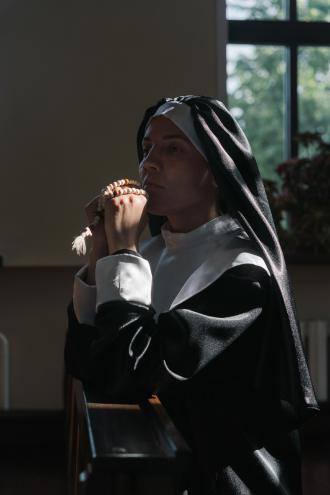
Nuns Confessional
The priest asks, "What part of your body did you use?"
The nun replies, "My right hand."
The priest tells her to dip her right hand in holy water say 10 hail Maryâs and all will be forgiven.
The second nun goes into the confessional and says, "Bless me father for I have sinned I touched a mans private parts."
The priest asks, "What part of your body did you use?"
The nun replies, "My left hand." The priest tells her to dip her left hand in the holy water say 10 hail Maryâs and all will be forgiven.
Well, this leaves the third and fourth nun standing in line. The fourth nun taps the third nun on the shoulder and asks, "Would you mind if I went first?"
The third nun says, "Sure I don't care, but would mind telling me why?"
The fourth nun replies, "Well, I would like to drink the water before you have to sit in it!"
On This Day
Wilhelm Eduard WeberDied 23 Jun 1891 at age 86 (born 24 Oct 1804). German physicist who investigated terrestrial magnetism. For six years, from 1831, Weber worked in close collaboration with Carl Gauss. Weber developed sensitive magnetometers, an electromagnetic telegraph (1833) and other magnetic instruments during this time. His later work (1855) on the ratio between the electrodynamic and electrostatic units of charge proved extremely important and was crucial to James Clerk Maxwell in his electromagnetic theory of light. (Weber found the ratio was 3.1074 x 10⁸ m/sec but failed to take any notice of the fact that this was close to the speed of light.) Weber's later years were devoted to work in electrodynamics and the electrical structure of matter. The magnetic unit, weber, is named after him. |


