 |
 |
Flex Wordle |
 |
Task 328 - NOISY, BELTS, TAINT
Average Number Of Attempts: 3.00
Correct Answers: 1 - Total Answers: 3
Correct Answers: 1 - Total Answers: 3
Rules
Guess the Flex WORDLE in 3 tries. After each try, the color of the tiles will change to show how close your guess is to the solution.
If the tile becomes GREEN, your number or operation is located at correct place. If the tile becomes RED, your number or opeartion exists within the expression, but at different place.
Joke Of The Day
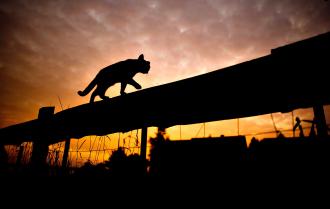
Cats on a fence
A tom cat and a tabby cat were courting on a back fence at night.
The tom leaned over to the tabby with pent up passion and purred... "I'll die for you"
The tabby gazed at him from under lowered eye lids and asked, "How many times?".
Source: JokesOfTHeDay.net - Brain Teasers Partner
On This Day
First printing press invented in the U.S.In 1816, the Columbian Press, the first printing press invented in America, was designed by George E. Clymer in Philadelphia, Pa. It was an iron horizontal platen hand-printing press using a system of compound levers that multiplied the pull of the operator to replace the iron screw previously used for downward pressure. An eagle-shaped counterweight lifted the platen back after the pressman's "pull". The Columbian was somewhat well-received in America, even at $400, which was twice the cost of a wooden press. In 1818, Clymer took his business to England and found much greater success. He joined forces with William Dixon in 1825. From the 1840s, the presses were manufactured by companies all over Europe. |
This site uses cookies to store information on your computer. Some are essential to help the site properly. Others give us insight into how the site is used and help us to optimize the user experience. See our privacy policy.


