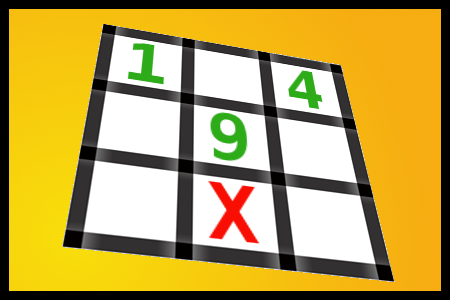
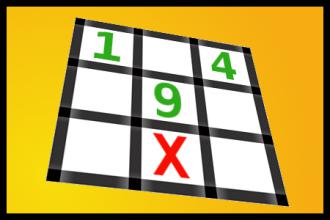
What number should replace the X to the magic square?
[632] What number should replace the X to the magic square? - What number should replace the X to the magic square? Author: Nebojsa Jevtovic - #brainteasers #math #riddles #magicsquare - Correct Answers: 60 - The first user who solved this task is Sanja Šabović
BRAIN TEASERS
enter your answer and press button OK

What number should replace the X to the magic square?

What number should replace the X to the magic square? Author: Nebojsa Jevtovic
Correct answers: 60
The first user who solved this task is Sanja Šabović.
#brainteasers #math #riddles #magicsquare
Register with your Google Account and start collecting points.
Check your ranking on list.

On a senior citizen bus tour...

On a senior citizen bus tour, the driver was surprised. While the passengers were unloading, to do some sightseeing, one elderly lady stopped and whispered in his ear, "Driver, I believe that I was sexually harassed!"
The driver didn't think much of this complaint, but promised he would check into it soon.
Later, that very same day, as the passengers were unloading again, a second little old lady bent down and whispered in his ear, "Sir, I believe I was sexually harassed!"
This time, he knew it had to be taken care of soon. A few passengers had remained on the bus, and he decided to go back and question them, to see if they had any knowledge of what was going on.
He found one little old man crawling along the bus floor underneath the seats and stooped down to question him. "Excuse me, sir, could I help you?"
The elderly man looked up and said, "Well, sonny, you sure can. I've lost my toupee and I'm trying to find it. I thought I'd located it twice, but they were both parted in the middle, and mine's parted on the side!"
Jokes of the day - Daily updated jokes. New jokes every day.
Follow Brain Teasers on social networks

Brain Teasers

puzzles, riddles, mathematical problems, mastermind, cinemania...

Charles Darwin

Died 19 Apr 1882 at age 73 (born 12 Feb 1809). Charles Robert Darwin was an English naturalist who presented facts to support his theory of the mode of evolution whereby favourable variations would survive which he called “Natural Selection” or “Survival of the Fittest,” and has become known as Darwinism. His two most important books were On the Origin of Species by Means of Natural Selection (1859) and The Descent of Man, and Selection in Relation to Sex.«
This site uses cookies to store information on your computer. Some are essential to help the site properly. Others give us insight into how the site is used and help us to optimize the user experience. See our privacy policy.