What a winning combination?
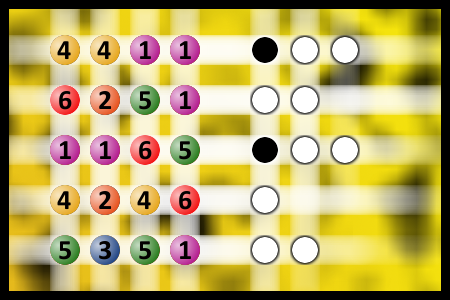
[829] What a winning combination? - The computer chose a secret code (sequence of 4 digits from 1 to 6). Your goal is to find that code. Black circles indicate the number of hits on the right spot. White circles indicate the number of hits on the wrong spot. - #brainteasers #mastermind - Correct Answers: 43 - The first user who solved this task is James Lillard
BRAIN TEASERS
enter your answer and press button OK

What a winning combination?

The computer chose a secret code (sequence of 4 digits from 1 to 6). Your goal is to find that code. Black circles indicate the number of hits on the right spot. White circles indicate the number of hits on the wrong spot.
Correct answers: 43
The first user who solved this task is James Lillard.
#brainteasers #mastermind
Register with your Google Account and start collecting points.
Check your ranking on list.

The perfume

The young man says to his date, "I really like the perfume you're wearing. What's it called?"

The young lady looks puzzled for a minute then searches through her purse, finally dumping the contents on the table between them. She searches through the pile and finally finds a small spray bottle.

She examines the label and announces, "Here it is... 'Unforgettable'."

Jokes of the day - Daily updated jokes. New jokes every day.
Follow Brain Teasers on social networks

Brain Teasers

puzzles, riddles, mathematical problems, mastermind, cinemania...

Frederic Ward Putnam

Born 16 Apr 1839; died 14 Aug 1915 at age 76.American archaeologist, naturalist and museum director whoplayeda major role in thepopularizationof anthropology, its acceptance as a university study, and instigated more anthropological museums. After entering Harvard College as a student (1856), he was much influenced Louis Agassiz. As Curator of the Peabody Museum (1875-1909), Putnam organized numerous pioneering expeditions in Southwest and Central American archeology. As director of the anthropological section of the World's Columbian Exposition in Chicago (1891-93), he mounted an impressive exhibit. It created wide-spread interest in anthropology, and subsequently became the nucleus of the great collections of the Field Museum in Chicago.«
This site uses cookies to store information on your computer. Some are essential to help the site properly. Others give us insight into how the site is used and help us to optimize the user experience. See our privacy policy.