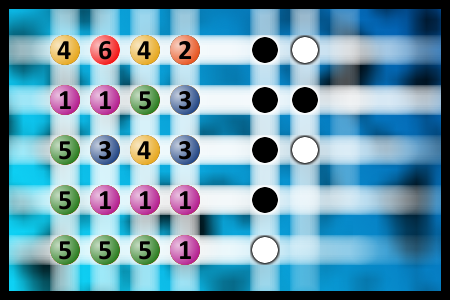
What a winning combination?
The computer chose a secret code (sequence of 4 digits from 1 to 6). Your goal is to find that code. Black circles indicate the number of hits on the right spot. White circles indicate the number of hits on the wrong spot.Correct answers: 76
The first user who solved this task is James Lillard.
#brainteasers #mastermind

Strong Medicine for the Nun
Pat is not feeling very well and he decides to go to a doctor.
While he is waiting in the doctor's reception room, a nun comes out of the doctor's office. She looks very ashen, drawn and haggard.
Pat goes into the doctor's office and says to the doctor: "I just saw a nun leaving who looked absolutely terrible. I have never seen a woman look worse."
The doctor says: "I just told her that she is pregnant."
Pat exclaims: "Oh my, is she?"
The doctor responds: "No, but it sure cured her hiccups."
While he is waiting in the doctor's reception room, a nun comes out of the doctor's office. She looks very ashen, drawn and haggard.
Pat goes into the doctor's office and says to the doctor: "I just saw a nun leaving who looked absolutely terrible. I have never seen a woman look worse."
The doctor says: "I just told her that she is pregnant."
Pat exclaims: "Oh my, is she?"
The doctor responds: "No, but it sure cured her hiccups."