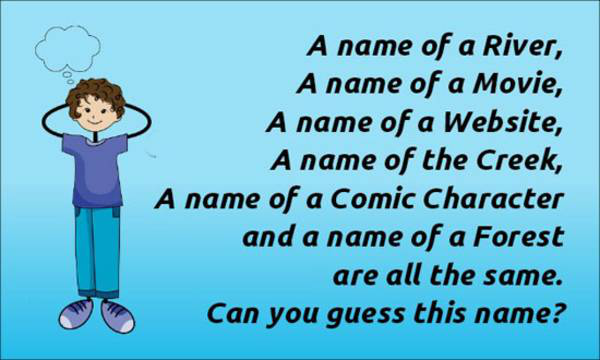
Can you guess this name?
A name of a River, A name of a Movie, A name of a Website, A name of the Creek, A name of a Comic Character and a name of a Forest are all the same. Can you guess this name?Correct answers: 144
The first user who solved this task is Roxana zavari.
#brainteasers #riddles

The only cow in a small Kentuc...
The only cow in a small Kentucky town stopped giving milk. The people did some research and found that they could buy a cow just across the state line in Illinois for $200.
They brought the cow from Illinois and the cow was wonderful. It produced lots of milk all of the time, and the people were very happy.
They decided to acquire a bull to mate with the cow to produce more cows like it. They would never have to worry about their milk supply again.
They bought the bull and put it in the pasture with their beloved cow. However, whenever the bull tried to mount the cow, the cow would move away. No matter what approach the bull tried, the cow would move away from the bull and he could not succeed in his quest. The people were very upset and decided to ask the Vet, who was very wise, what to do.
They told the Vet what was happening. "Whenever the bull tries to mount our cow, she moves away. If he approaches from the back, she moves forward. When he approaches her from the front, she backs off. An attempt from the side, she walks away to the other side."
The Vet thought about this for a minute and asked, "Did you by chance, buy this cow in Illinois?"
The people were dumbfounded, since no one had ever mentioned where they bought the cow. "You are truly a wise Vet," they said. "How did you know we got the cow in Illinois?"
The Vet replied with a distant look in his eye, "My wife is from Illinois."
They brought the cow from Illinois and the cow was wonderful. It produced lots of milk all of the time, and the people were very happy.
They decided to acquire a bull to mate with the cow to produce more cows like it. They would never have to worry about their milk supply again.
They bought the bull and put it in the pasture with their beloved cow. However, whenever the bull tried to mount the cow, the cow would move away. No matter what approach the bull tried, the cow would move away from the bull and he could not succeed in his quest. The people were very upset and decided to ask the Vet, who was very wise, what to do.
They told the Vet what was happening. "Whenever the bull tries to mount our cow, she moves away. If he approaches from the back, she moves forward. When he approaches her from the front, she backs off. An attempt from the side, she walks away to the other side."
The Vet thought about this for a minute and asked, "Did you by chance, buy this cow in Illinois?"
The people were dumbfounded, since no one had ever mentioned where they bought the cow. "You are truly a wise Vet," they said. "How did you know we got the cow in Illinois?"
The Vet replied with a distant look in his eye, "My wife is from Illinois."