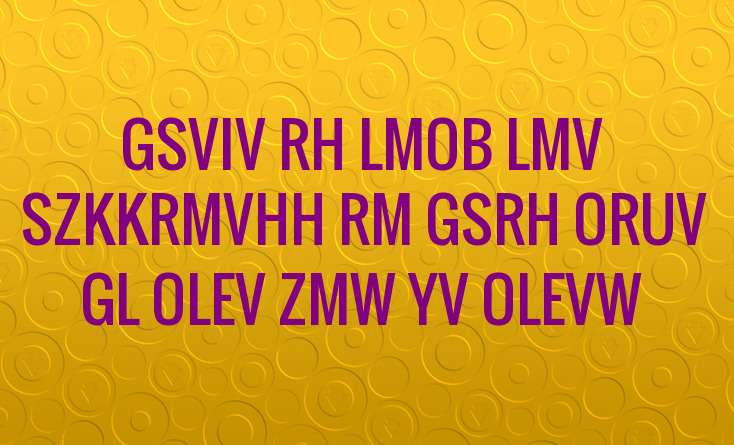
Decrypt hidden message
Can you decrypt hidden message (GSVIV RH LMOB LMV SZKKRMVHH RM GSRH ORUV GL OLEV ZMW YV OLEVW)?Correct answers: 33
The first user who solved this task is Allen Wager.
#brainteasers #wordpuzzles #riddles

The Preacher and the Frog Princess
An old country preacher was fishing one afternoon when he noticed a frog sitting next to him. The frog said, “Mister, I’ve had a spell cast on me. If you’ll kiss me, I’ll turn into a beautiful princess and I’ll make you happy for the rest of your life.”
The old preacher smiled, picked up the frog, and put it in his pocket. After a while, he looked into his pocket to see how the frog was doing.
The frog said again, “Mister, I’ve had a spell cast on me. If you’ll kiss me, I’ll turn into a beautiful princess and I’ll make you happy for the rest of your life.”
The preacher just smiled and kept on fishing. When he checked on the frog again, it said, “What’s wrong with you, fella? I said I’ve been bewitched. Just kiss me and I’ll turn back into a beautiful princess and make you the happiest man on earth for the rest of your life!”
The old preacher just smiled and said, “Frog, I’m sorry to tell you this…but at my age, I’d rather have a talking frog than a beautiful princess!”
The old preacher smiled, picked up the frog, and put it in his pocket. After a while, he looked into his pocket to see how the frog was doing.
The frog said again, “Mister, I’ve had a spell cast on me. If you’ll kiss me, I’ll turn into a beautiful princess and I’ll make you happy for the rest of your life.”
The preacher just smiled and kept on fishing. When he checked on the frog again, it said, “What’s wrong with you, fella? I said I’ve been bewitched. Just kiss me and I’ll turn back into a beautiful princess and make you the happiest man on earth for the rest of your life!”
The old preacher just smiled and said, “Frog, I’m sorry to tell you this…but at my age, I’d rather have a talking frog than a beautiful princess!”