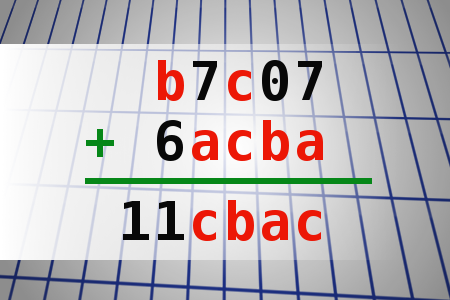
Find number abc
[7777] Find number abc - If b7c07 + 6acba = 11cbac find number abc. Multiple solutions may exist. - #brainteasers #math - Correct Answers: 1
BRAIN TEASERS
enter your answer and press button OK

Find number abc

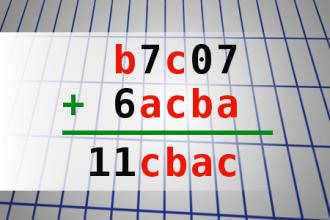
If b7c07 + 6acba = 11cbac find number abc. Multiple solutions may exist.
Correct answers: 1
#brainteasers #math
Register with your Google Account and start collecting points.
Check your ranking on list.

Competition at the retirement home

An old man and an old woman are together every night. They aren't married, but for years and years they have spent every night together. All they ever do is sit on the couch buck naked and watch TV while she holds his weiner.

Every night, like clockwork, they do this - sit on the couch watching TV while she holds his weiner.

One night he doesn't show up. Then a second night goes by - no show. She calls him up.

"Where you been?" "Oh ... I've been down at what's her name's." "What are you doing there?"

"Pretty much the same thing we do - sitting naked on the couch watching TV while she holds my weiner."

"Well, what does she have that I don't have?"

"Parkinson's."

Jokes of the day - Daily updated jokes. New jokes every day.
Follow Brain Teasers on social networks

Brain Teasers

puzzles, riddles, mathematical problems, mastermind, cinemania...

John Bostock

Baptized 29 Jun 1773; died 6 Aug 1846 at age 73.English physician and chemist who in his early career trained in medicine (as his father had before him), earned an M.D. in 1798, and practiced in Liverpool until moving to London (1817). He there turned to lecturing on chemistry at Guy's Hospital, and pursued some interest also in geology. On 16 Mar 1819, he read the first paper describing hay fever. He was the first to detect a reciprocal relationship between the amount of urea in urine dropping as it increased in the blood. In tandem, the albumin in the blood decreased as that in the urine rose. In 1818, he published An Account of the History and Present State of Galvanisum. His chief medical work was System of Physiology (1824). On the Purification of Thames Water (1826) was his only geological work. He died of cholera, caught while in Paris.«
This site uses cookies to store information on your computer. Some are essential to help the site properly. Others give us insight into how the site is used and help us to optimize the user experience. See our privacy policy.