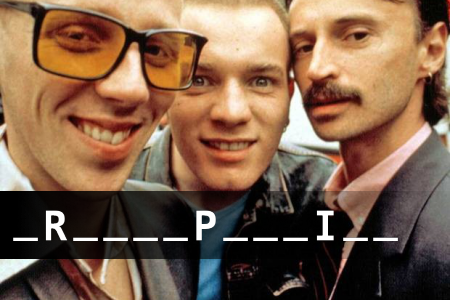
Find the missing text [*R****P***I**]
[1892] Find the missing text [*R****P***I**] - Background picture associated with the solution. - #brainteasers #wordpuzzles - Correct Answers: 38 - The first user who solved this task is Sanja Šabović
BRAIN TEASERS
enter your answer and press button OK

Find the missing text [*R****P***I**]

Background picture associated with the solution.
Correct answers: 38
The first user who solved this task is Sanja Šabović.
#brainteasers #wordpuzzles
Register with your Google Account and start collecting points.
Check your ranking on list.

A newly ordained priest, nervo...

A newly ordained priest, nervous about hearing confessions, finally asks an older priest to observe how he does and give some tips. After listening in on the second confession, the older priest suggested that the younger man fold his arms, maybe rub his chin with one hand while saying phrases like "I see" or "I understand" or "Yes, my child. Go on".
The young priest puts the suggestions into practice and later tells the older priest how much it has helped getting more information from his flock.
"You've done well," said the older man. "Isn't that much better than slapping your knee and yelling 'No way! What happened next?'"
Jokes of the day - Daily updated jokes. New jokes every day.
Follow Brain Teasers on social networks

Brain Teasers

puzzles, riddles, mathematical problems, mastermind, cinemania...

Christian Jürgensen Thomsen

Born 29 Dec 1788; died 21 May 1865 at age 76.Danish archaeologist whose designation of the Stone, Iron and Bronze Ages became widely accepted. He was the first curator of the National Museum of Denmark, Copenhagen (1816). He classified the specimens in this tripartite way, on the basis of the material used in making weapons and tools, while he was organising the museum exhibits to show man's progressive cultural and technological development in Europe. It was adopted as the basis of chronological schemes elsewhere in the world by generations of archaeologists. In 1841, he established the first ethnographic museum. In 1849, he became director of the National Museum. He was one of the first to open collections to the public free of charge in the interests of popular education.«
This site uses cookies to store information on your computer. Some are essential to help the site properly. Others give us insight into how the site is used and help us to optimize the user experience. See our privacy policy.