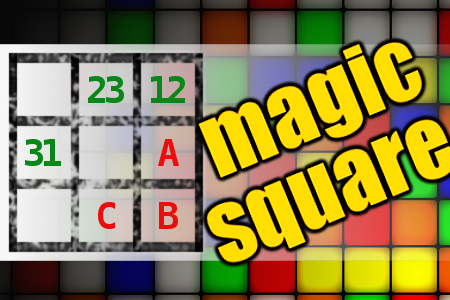

MAGIC SQUARE: Calculate A+B*C
The aim is to place the some numbers from the list (2, 4, 12, 21, 23, 26, 30, 31, 64, 70, 72, 80, 90) into the empty squares and squares marked with A, B an C. Sum of each row and column should be equal. All the numbers of the magic square must be different. Find values for A, B, and C. Solution is A+B*C.
30 Funny Skeleton Halloween Jokes
Q) Why wouldn't the skeleton go skydiving?
A) He didn't have the guts for it.
Q) How do you make a skeleton laugh?
A) Tickle his funny bone.
Q) Why wasn't the skeleton afraid of the policeman?
A) He knew they couldn't pin anything on him.
Q) What room can a skeleton not go into?
A) The living room
Q) Why do skeletons make bad miners?
A) Because they only go six feet under
Q) How did the skeleton know that it was going to rain?
A) He could feel it in his bones.
Q) What did the skeleton order at the restaurant?
A) Spare ribs
Q) What did the skeleton say to the bartender?
A) I'll have a beer and a mop.
Q) What did the skeleton wear on Halloween?
A) A human costume
Q) Why are skeletons always so calm?
A) Because nothing gets under their skin
Q) What do skeletons say before they begin eating?
A) Bon appetit!
Q) Why don't skeletons play music in church?
A) Because they have no organs.
Q) What's a skeleton's favorite weapon?
A) A bow and marrow.
Q) Where did the skeleton keep his pet bird?
A) In his rib cage
Q) What do you call a skeleton who uses the doorbell?
A) A dead ringer
Q) What do you call the lie told by a skeleton?
A) A little fib-ula
Q) What do skeletons do on New Year's Eve?
A) Eat, drink and be scary
Q) Why did the skeleton cross the road?
A) To go to the body shop
Q) What did the boss call his incompetent employee?
A) A bonehead
Q) What did the skeleton say when he rode his Harley?
A) Bone to be wild!
Q) Why did the little skeleton want to quit the football team?
A) Because his heart wasn't in it
Q) Why didn't the little skeleton want to get up in the morning?
A) He was a lazy bones.
Q) Where do teenage skeletons go to class?
A) High skull
Q) What instrument did the little skeleton want to play?
A) The trombone
Q) Why wouldn't the little skeleton eat the cafeteria food?
A) He didn't have the stomach for it.
Q) Why did the mother keep telling the little skeleton to drink his milk?
A) Because milk is good for the bones
Q) Why did the little skeleton laugh at the joke?
A) Because he thought it was humerus
Q) Why did the little skeleton do extra work?
A) Because he wanted the bone-us points
Q) Why didn't the little skeleton want to go to the dance?
A) He had no body to go with.
Q) What instrument did the little skeleton want to play?
A) The trombone
Q) Why wouldn't the little skeleton eat the cafeteria food?
A) He didn't have the stomach for it.
Q) Why did the little skeleton hate the winter?
A) Because the wind went right through him