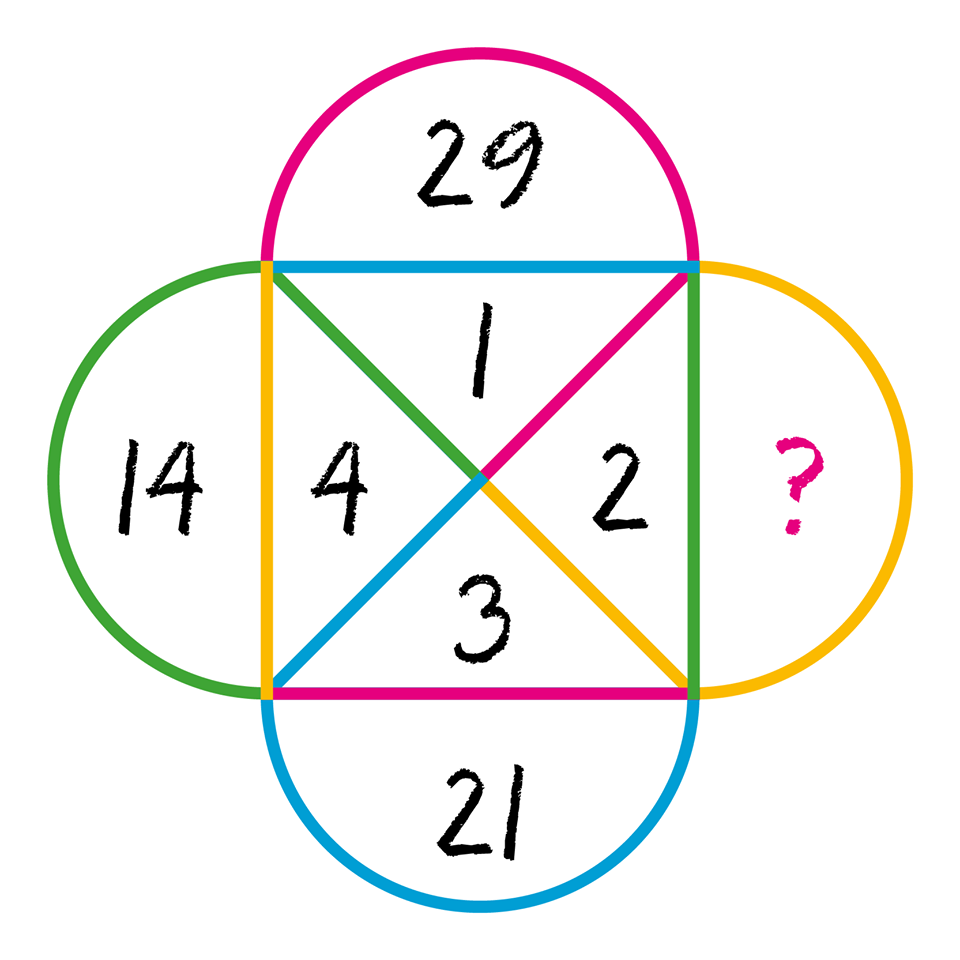
Replace the question mark with a number
MATH PUZZLE: Can you replace the question mark with a number?
Cockney parrot
A guy walks into a pet shop looking for a pet, as he glanced into the back room he sees a beautiful parrot all alone in a cage so he said to the pet shop owner "is that parrot for sale?"
"Not really said the shop owner you see I’ve sold him twice before but he always gets brought back because he is so big headed".
The guy said "no problem I like a challenge so I’ll take him".
When he get home with the parrot he takes the cover off the cage and immediately the parrot says "I’m a cockney parrot and I’m hard as fü@k", he keeps repeating it all afternoon.
So, the guy thinks i'll cure him and he goes back to the pet shop and buys a kestrel, takes it home and the parrot immediately says
"I’m a cockney parrot and I’m hard as fü@k", so the guy pops the kestrel in the cage and nothing happens.
Next morning when he goes downstairs the Kestrel is dead at the bottom of the cage and not a feather ruffled on the parrot.
"Told you" said the parrot, "I’m a cockney parrot and I’m hard as fü@k".
Right said the guy I will cure you this time so he gets a Peregrine from the pet shop and again pops it in the cage with the parrot thinking this will sort him out!
Still nothing happens.
Next morning when he comes downstairs the Peregrine is dead on the bottom of the cage and not a feather ruffled on the parrot.
"Told you" said the parrot, "I’m a cockney parrot and I’m hard as fü@k".
The guy is really annoyed now so again visits the pet shop and gets a Golden Eagle thinking there is no way the parrot is going to do this bird. Again he pops the Eagle into the cage with the parrot and again nothing happens.
Next morning when he comes downstairs he sees the Eagle dead at the bottom of the cage and the parrot without a single feather on his body.
"What happened here", said the guy?
"I had to take my coat off for that b@st@rd".