What a winning combination?
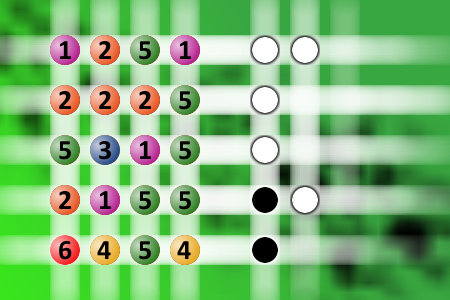
The computer chose a secret code (sequence of 4 digits from 1 to 6). Your goal is to find that code. Black circles indicate the number of hits on the right spot. White circles indicate the number of hits on the wrong spot.
Genie's Map
A woman rubbed a bottle and out popped a genie. The amazed woman asked if she got three wishes.
The genie said, "Nope, sorry, three-wish genies are a storybook myth. I'm a one-wish genie. So... what'll it be?"
The woman did not hesitate. She said, "I want peace in the Middle East. See this map? I want these countries to stop fighting with each other and I want all the Arabs to love the Jews and Americans and vice-versa. It will bring about world peace and harmony."
The genie looked at the map and exclaimed, "Lady, be reasonable. These countries have been at war for thousands of years. I'm out of shape after being in a bottle for five hundred years.. I'm good but not THAT good!
I don't think it can be done. Make another wish and please be reasonable."
The woman thought for a minute and said, "Well, I've never been able to find the right man. You know, one that's considerate and fun, romantic, likes to cook and help with the house cleaning, is good in bed, and gets along with my family, doesn't watch sports all the time, and is faithful.
That is what I wish for...a good man."
The genie let out a sigh and said, "Let me see the f*cking map again."