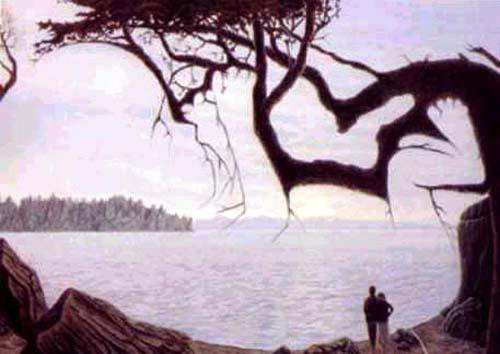

What additional can you see ...
[3237] What additional can you see ... - What additional can you see in this picture that does not meet the eye clearly? - #brainteasers #riddles - Correct Answers: 80 - The first user who solved this task is Sanja Šabović
BRAIN TEASERS
enter your answer and press button OK

What additional can you see ...

What additional can you see in this picture that does not meet the eye clearly?
Correct answers: 80
The first user who solved this task is Sanja Šabović.
#brainteasers #riddles
Register with your Google Account and start collecting points.
Check your ranking on list.

New-Fangled Ideas

An elderly priest was speaking to a younger priest. "You had a good idea to replace the first four pews with plush bucket theatre seats. It worked like a charm! The front of the church always fills first now."As the young priest nodded, the old priest continued, “You also told me to assign a little more beat to the music because it would bring young people back to church. So, I supported you when you bought in that rock ‘n’ roll Gospel choir. Now, our services are consistently packed.“"Thank you, Father," answered the young priest. "I am pleased that you are open to the new ideas of youth.""All of these ideas have been well and good," said the elderly priest. "But, I'm afraid you've gone too far with the drive-thru confessional." "But Father," protested the young priest. "My confessions and donations have nearly doubled since I began that!""Yes," replied, the elderly priest. "I appreciate that, but the flashing neon sign, ‘Toot 'n’ Tell or Go to Hell’ cannot stay on the church roof!"-
Jokes of the day - Daily updated jokes. New jokes every day.
Follow Brain Teasers on social networks

Brain Teasers

puzzles, riddles, mathematical problems, mastermind, cinemania...

Comte Claude Louis Berthollet

Born 9 Dec 1748; died 6 Nov 1822 at age 73.French chemist who was the first to note that the completeness of chemical reactions depends in part upon the masses of the reacting substances (1803); he thus came close to formulating the law of mass action. Though he incorrectly concluded that elements unite in all proportions, his resulting controversy with the chemist Joseph-Louis Proust led to the establishment of the law of definite proportions. He continued Carl Scheele's research on chlorine, showing in 1785 how it could be used for bleaching. He continued Joseph Priestley's investigation of ammonia, and was the first to show it was a compound of hydrogen and nitrogen. He discovered potassium chlorate.
This site uses cookies to store information on your computer. Some are essential to help the site properly. Others give us insight into how the site is used and help us to optimize the user experience. See our privacy policy.