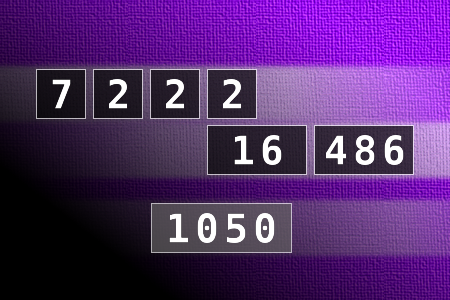
Calculate the number 1050
NUMBERMANIA: Calculate the number 1050 using numbers [7, 2, 2, 2, 16, 486] and basic arithmetic operations (+, -, *, /). Each of the numbers can be used only once.Correct answers: 11
The first user who solved this task is Nasrin 24 T.
#brainteasers #math #numbermania

You Might Be A Redneck If ...
Your biggest ambition in live is to "git that big ole coon.
The one what hangs 'round over yonder, back'ah Bubba's barn..."
Three quarters of the clothes you own have logos on them.
Your grandfather completely executes the "pull my finger" trick at the family reunion.
When you leave your house, you are followed by federal agents of the Bureau of Alcohol Tobacco and Firearms, and the only thing you worry about is if you can lose them or not.
You have a house that's mobile and five cars that aren't.
You gene pool doesn't have a "deep end."
Your `huntin dawg' cost more than the truck you drive him around in.
You have a Hefty bag for a convertible top.
Your belt buckle weighs more than three pounds.
The one what hangs 'round over yonder, back'ah Bubba's barn..."
Three quarters of the clothes you own have logos on them.
Your grandfather completely executes the "pull my finger" trick at the family reunion.
When you leave your house, you are followed by federal agents of the Bureau of Alcohol Tobacco and Firearms, and the only thing you worry about is if you can lose them or not.
You have a house that's mobile and five cars that aren't.
You gene pool doesn't have a "deep end."
Your `huntin dawg' cost more than the truck you drive him around in.
You have a Hefty bag for a convertible top.
Your belt buckle weighs more than three pounds.