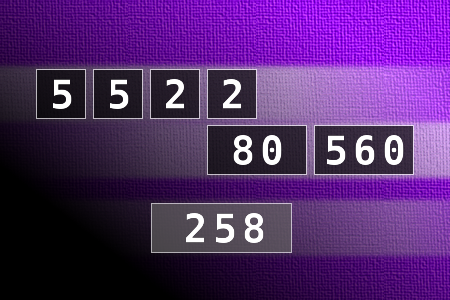
Calculate the number 258
NUMBERMANIA: Calculate the number 258 using numbers [5, 5, 2, 2, 80, 560] and basic arithmetic operations (+, -, *, /). Each of the numbers can be used only once.Correct answers: 14
The first user who solved this task is Djordje Timotijevic.
#brainteasers #math #numbermania

A man moves into a n*dist colo...
A man moves into a n*dist colony. He receives a letter from his mother asking him to send her a current photo of himself in his new location. Too embarrassed to let her know that he lives in a n*dist colony, he cuts a photo in half and sends her the top half.
Later he receives another letter asking him to send a picture to his grandmother. The man cuts another picture in half, but accidentally sends the bottom half of the photo. He is really worried when he realizes that he sent the wrong half, but then remembers how bad his grandmother's eyesight is, and hopes she won't notice.
A few weeks later, he receives a letter from his grandmother. It says... "Thank you for the picture. Change your hair style, it makes your nose look too short!"
Later he receives another letter asking him to send a picture to his grandmother. The man cuts another picture in half, but accidentally sends the bottom half of the photo. He is really worried when he realizes that he sent the wrong half, but then remembers how bad his grandmother's eyesight is, and hopes she won't notice.
A few weeks later, he receives a letter from his grandmother. It says... "Thank you for the picture. Change your hair style, it makes your nose look too short!"