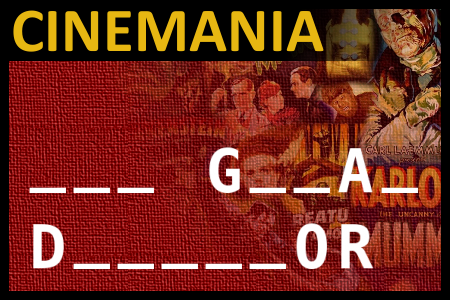
CINEMANIA: Guess the movie title
Film was made in 1940.Correct answers: 48
The first user who solved this task is Djordje Timotijevic.
#brainteasers #movie #film #cinemania

Two factory workers were talki...
Two factory workers were talking. "I know how to get some time off fromwork." said the man.
"How do you think you will do that?" said the other one. He proceeded toshow her...by climbing up to the rafters, and hanging upside down.
The boss walked in, saw the worker hanging from the ceiling, and asked himwhat on earth he was doing? "I'm a light bulb" answered the guy.
"I think you need some time off," said the boss. So, the man jumped downand walked out of the factory. The second worker began walking out too.The boss asked her where did she think she was going?
"Home. I can't work in the dark."
"How do you think you will do that?" said the other one. He proceeded toshow her...by climbing up to the rafters, and hanging upside down.
The boss walked in, saw the worker hanging from the ceiling, and asked himwhat on earth he was doing? "I'm a light bulb" answered the guy.
"I think you need some time off," said the boss. So, the man jumped downand walked out of the factory. The second worker began walking out too.The boss asked her where did she think she was going?
"Home. I can't work in the dark."