What a winning combination?
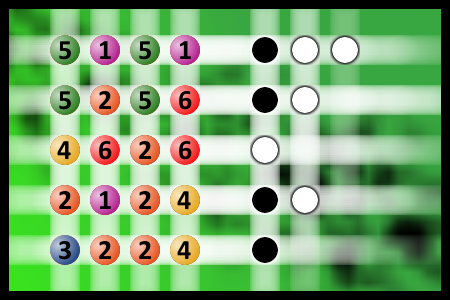
The computer chose a secret code (sequence of 4 digits from 1 to 6). Your goal is to find that code. Black circles indicate the number of hits on the right spot. White circles indicate the number of hits on the wrong spot.Correct answers: 64
The first user who solved this task is Sanja Šabović.
#brainteasers #mastermind

MEN vs WOMEN on ATM
MAN:
1) Pull up to machine
2) Wind window down
3) Insert ATM card, enter PIN
4) Retrieve cash
5) Drive away
WOMAN:
1) Pull up to machine
2) Open door (too far away from machine)
3) Search through all of the 112 compartments in handbag for ATM card
4) Do make up, apply lipstick, fix hair
5) Insert Card
6) Remove card
7) Insert card the correct way up
8) Search for piece of paper with PIN on it
9) Enter PIN
10) Enter correct PIN
11) Retrieve cash, put in bag
12) Drive off
13) Reverse back to machine
14) Retrieve card
15) Drive three miles away
16) Release hand-brake
1) Pull up to machine
2) Wind window down
3) Insert ATM card, enter PIN
4) Retrieve cash
5) Drive away
WOMAN:
1) Pull up to machine
2) Open door (too far away from machine)
3) Search through all of the 112 compartments in handbag for ATM card
4) Do make up, apply lipstick, fix hair
5) Insert Card
6) Remove card
7) Insert card the correct way up
8) Search for piece of paper with PIN on it
9) Enter PIN
10) Enter correct PIN
11) Retrieve cash, put in bag
12) Drive off
13) Reverse back to machine
14) Retrieve card
15) Drive three miles away
16) Release hand-brake