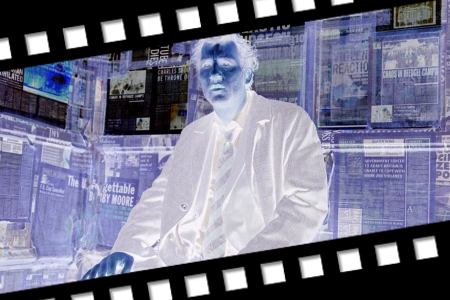
CINEMANIA: Guess the movie title
See negative of movie scene and guess the title. Length of words in solution: 8,2,3
Letter to a Nosey Mom
A mother enters her daughter's bedroom and sees a letter over the bed. With the worst premonition, she reads it, with trembling hands:
It is with great regret and sorrow that I'm telling you that I eloped with my new boyfriend. I found real passion and he is so nice, with all his piercing and tattoos and his big motorcycle.
But is not only that mom, I'm pregnant and Ahmed said that we will be very happy in his trailer in the woods. He wants to have many more children with me and that's one of my dreams.
I've learned that marijuana doesn't hurt anyone and we'll be growing it for us and for his friends, who are providing us with all the cocaine and ecstasy we may want.
In the meantime, we'll pray for the science to find the AIDS cure, for Ahmed to get better, he deserves it.
Don't worry Mom, I'm 15 years old now and I know how to take care of myself. Some day I'll visit, so you can know your grandchildren.
Your daughter,
Judith
PS: Mom, it's not true. I'm at the neighbor's house. I just wanted to show you that there are worse things in life than the school's report card that's in my desk's drawer...I love you!