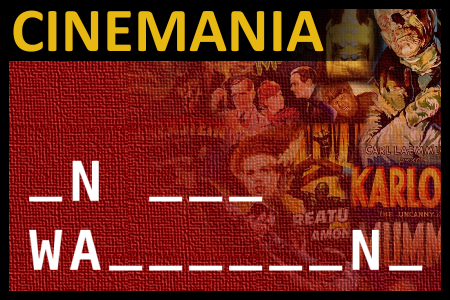
CINEMANIA: Guess the movie title
An ex-prize fighter turned longshoreman struggles to stand up to his corrupt union bosses. Film was made in 1954.Correct answers: 48
The first user who solved this task is Djordje Timotijevic.
#brainteasers #movie #film #cinemania

Upon reaching 65, old Tom deci...
Upon reaching 65, old Tom decided to retire. His wife suggested he go and do something to occupy his time, like join a club or get a hobby
Old Tom obliged and went out for a couple of hours. When he got home his wife asked about his day and he replied, "Oh, I joined a parachute club."
"What? Are you nuts? You're 65 years old and you're going to start jumping out of airplanes?"
"Yeah, look I even got a membership card."
"Old man, you need glasses! This is a membership in a Prostitute Club, not a Parachute Club!"
"Oh, great! Now what am I going to do? I signed up for 5 jumps a week!"
Old Tom obliged and went out for a couple of hours. When he got home his wife asked about his day and he replied, "Oh, I joined a parachute club."
"What? Are you nuts? You're 65 years old and you're going to start jumping out of airplanes?"
"Yeah, look I even got a membership card."
"Old man, you need glasses! This is a membership in a Prostitute Club, not a Parachute Club!"
"Oh, great! Now what am I going to do? I signed up for 5 jumps a week!"